
Space Heaters and Tripping Breakers: A Kansas Winter Guide
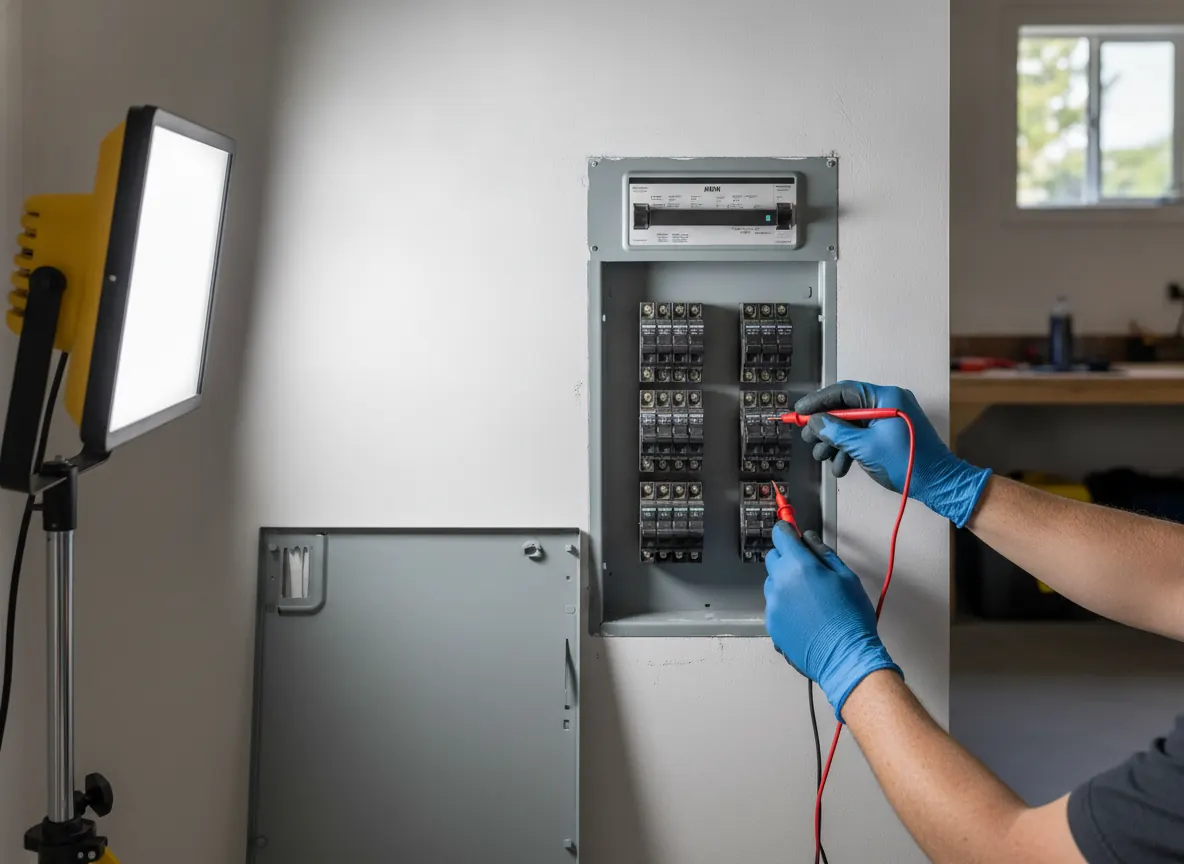
A space heater that trips the breaker is a familiar winter problem in Topeka, KS homes. The reason is usually simple arithmetic: a heater on high uses most of what a typical bedroom circuit can carry, and anything else on that circuit pushes it over. This guide explains the math, what you can do tonight, and when the real fix is a new circuit or panel work by a licensed electrician.
Do not ignore heat. If the heater's plug, the outlet or the cord feels hot, looks discolored or smells like burning plastic, unplug the heater and stop using that outlet. Never tape a breaker on or swap it for a bigger one. If there is smoke or fire, call 911.
Why a space heater trips a breaker
Most portable electric heaters top out at 1,500 watts. On a 120-volt circuit that is about 12.5 amps (1,500 ÷ 120). Many bedroom and living room circuits in older homes are 15-amp circuits, and the National Electrical Code generally treats loads that run for hours as continuous, sizing them at no more than about 80% of the breaker, which is 12 amps on a 15-amp circuit. A heater on high is already at that line before you add a lamp, a TV, a phone charger or an electric blanket.
The breaker is doing what it should. It is protecting the wire in your walls from overheating.
| What happens | Likely cause | Next step |
|---|---|---|
| Trips after the heater runs a while on high | Overload: heater plus other loads on one circuit | Use the low setting or move the heater to another circuit |
| Trips the instant the heater turns on | A short or fault in the heater, cord or outlet | Stop using that heater and have the outlet checked |
| A GFCI or AFCI trips, not a standard breaker | Ground fault, arcing, or a heater that does not play well with the device | Do not bypass it; have an electrician find the cause |
| Trips even with the heater unplugged | A wiring or breaker problem | Call an electrician |
Topeka winters and electric heat
Topeka averages about 114 nights a year at or below freezing and about 4,860 heating degree days (NOAA 1991–2020 normals, Topeka Billard Airport). About a quarter of Topeka homes heat mainly with electricity (Census ACS 2020–2024 5-year estimates), and many more use space heaters to warm a cold bedroom, a basement office or an addition the furnace never reached. The median Topeka home was built in 1967 (same ACS series), so a lot of houses have circuits laid out for far fewer plug-in loads than people use now.
Winter outages add another reason people reach for portable heat. The March 18–19, 1984 ice storm cut power to about 100,000 people in Topeka, per the National Weather Service, and the December 10–11, 2007 ice storm affected nearly all of Kansas. If you plan to run heaters on a generator during an outage, read our guide to generator interlocks and transfer switches. Never backfeed a house through a dryer outlet or a "suicide cord."
What to do tonight
- Unplug the heater, then reset the breaker: push it fully off, then on.
- Turn the heater to its low or 750-watt setting if it has one.
- Move other loads off that circuit, or move the heater to an outlet on a different circuit. A label on the panel door, or a quick test with a lamp, shows which outlets share a breaker.
- Plug the heater straight into a wall outlet. Heater makers generally warn against extension cords and power strips, which can overheat.
- Keep the heater on a hard, level floor with clear space around it. Fire-safety groups commonly recommend about three feet from bedding, curtains and furniture.
- Use a heater with a tip-over switch and overheat protection, and turn it off when you leave the room or go to sleep.
When the outlet is the problem
An old, loose outlet is a weak point under a heater's steady load. If the plug falls out easily, the face is cracked, or the outlet gets warm, it needs replacing. Homes wired between 1965 and the mid-1970s may contain aluminum branch wiring, according to the U.S. Consumer Product Safety Commission, and the CPSC lists COPALUM and AlumiConn connectors among recognized repairs. An electrician can tell you what is behind the plate. The outlets and GFCI page covers outlet replacement.
Long-term fixes for a cold room
A dedicated circuit
A new 20-amp circuit for the room where you run a heater, or for a home office, takes the heater off a shared circuit.
Hardwired heat
A baseboard or wall heater on its own 240-volt circuit with a thermostat is often a better fit than a plug-in unit for a room that is always cold.
Panel capacity
If the panel is full, uses fuses, or is a 60- or 100-amp service, new circuits may need panel work first. See panel upgrades and replacement.
Fix the cold
Air sealing, insulation and HVAC work can make the heater unnecessary. That is a different trade, but worth asking about.
What does it cost?
Published national cost guides put electricians at $50–$130 per hour and a service call at $100–$200, which often covers the first hour (HomeGuide, 2026). A panel replacement at the same amperage runs $518–$2,193 (Angi), and an upgrade from 100 to 200 amps runs $1,300–$4,500 (HomeGuide, Fixr). Evening and weekend visits cost more, about $150–$200 per hour plus a call-out fee (HomeGuide).
Published national cost-guide estimates (2025–2026), not quotes. Quotes come from independent contractors, not this site.
Ask for a written, itemized quote, and ask about trip or diagnostic fees and after-hours rates before anyone arrives. The Topeka electrician cost guide has the full table and a calculator.
Permits and licenses
A new circuit is permit work. Topeka enforces the 2023 National Electrical Code. Most new wiring, circuits, panels and service changes need a city permit; your contractor normally pulls it. Topeka's 2026 residential trade permit fee is $55, and work started without a permit costs a contractor $500 extra. Kansas has no statewide electrician license; cities and counties license electricians (K.S.A. 12-1525). In Topeka, ask for the contractor's City of Topeka license and confirm it with Development Services (785-368-3905). Outside city limits in Shawnee County, check with Land Use & Development (785-251-5410).
Renters: Kansas law requires landlords to keep supplied electrical systems in good and safe working order (K.S.A. 58-2553). If a heater is your only heat because the furnace is out, report it to the landlord in writing. This is general information, not legal advice.
If the breaker trips with nothing running, or will not reset at all, see the emergency electrician page.
Topeka Electricians is a free quote-referral service, not an electrician or electrical contractor. It holds no electrical license and does not perform electrical work. If you want quotes, describe the job once and independent, locally licensed electrical contractors in the Topeka area can reply on their own schedules. Companies may pay to receive requests or calls.
Frequently asked questions
Why does my space heater keep tripping the breaker?
A 1,500-watt heater draws about 12.5 amps, close to what a 15-amp circuit should carry for long periods. Anything else on that circuit can push it over. If it trips the instant the heater turns on, the heater, cord or outlet may have a fault.
Can I plug a space heater into a power strip or extension cord?
Heater manufacturers generally warn against it. Power strips and light cords can overheat under a heater's steady load. Plug the heater directly into a wall outlet in good condition.
Should I replace the 15-amp breaker with a 20-amp breaker?
No. The breaker is sized to protect the wire in the wall. A larger breaker on wire meant for 15 amps can let that wire overheat. The fix is a new circuit or less load, done by a licensed electrician with a permit.
How much does it cost to add a circuit for a space heater?
It depends on the distance from the panel, wall access and panel space. Expect a service call plus labor at about $50 to $130 per hour in national cost guides, more if the panel needs work. Ask for a written, itemized quote.