
Generator Interlock vs Transfer Switch for Kansas Ice Storms
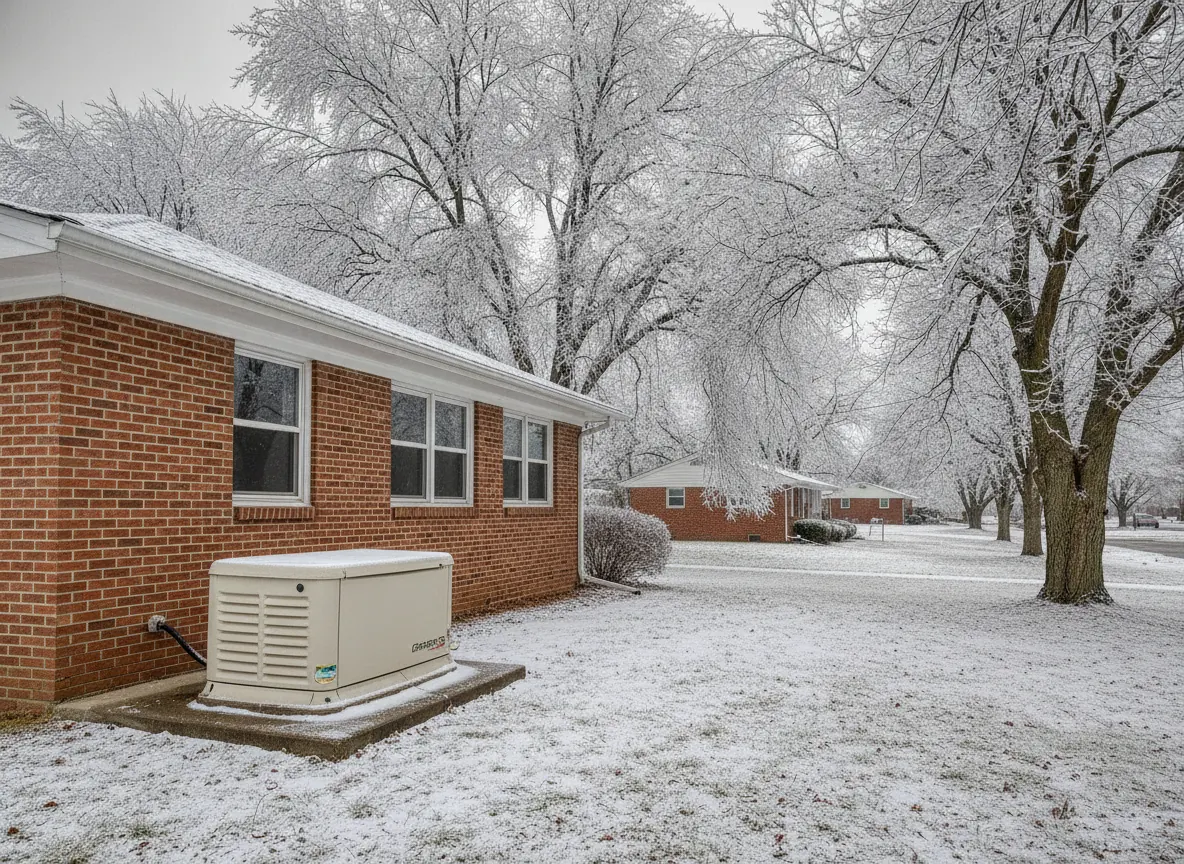
Short answer: both a generator interlock and a manual transfer switch let you run a portable generator into your home's wiring without backfeeding the utility lines. An interlock is a plate on your main panel that makes it impossible to have the main breaker and the generator breaker on at the same time. A transfer switch is a separate switch or small panel with a set of chosen circuits. An interlock usually costs less and lets you pick circuits at the panel; a transfer switch is more fixed and works with almost any panel. Either one needs a licensed electrician and, in Topeka, a city permit.
Never backfeed
Backfeeding means plugging a generator into a dryer outlet or wall receptacle with a double-ended cord to power the house. Don't. With the main breaker on, the generator's power can flow out to the utility transformer, which steps it up to line voltage. That can hurt line workers and neighbors, and it can damage the generator and your wiring when grid power returns. A properly installed interlock or transfer switch is how you avoid all of that.
Run the generator outdoors, away from doors, windows and vents, and keep carbon monoxide alarms working inside.
Why Topeka homeowners ask about this in winter
Winter outages tend to last longer than summer ones, because ice brings down limbs and lines across a wide area. Topeka's record shows it:
- March 18–19, 1984: the worst ice storm in Topeka's history, per the NWS, cut power to about 100,000 people. Some areas were without power for more than a week.
- December 10–11, 2007: an ice storm across nearly all of Kansas affected around 260,000 people, and many areas were without power for one to two weeks (NWS Wichita).
Topeka averages about 114 nights a year at or below freezing (NOAA 1991–2020 normals). A gas furnace still needs electricity for its blower and controls, so even a small generator connected the right way can keep the heat running.
Interlock vs transfer switch, side by side
| Generator interlock | Manual transfer switch | |
|---|---|---|
| How it works | A sliding plate on the main panel; the main breaker must be off before the generator breaker can turn on | A separate switch or subpanel; each chosen circuit flips from utility to generator |
| Installed cost | $400–$850 (HomeGuide) | $400–$1,300 (HomeGuide) |
| Circuits you can run | Any circuit in the panel, within the generator's capacity | Only the circuits wired to the switch, often 6 to 10 |
| Panel fit | Needs an interlock kit listed for your panel and space for a back-fed generator breaker | Works with most panels, including some that have no listed interlock |
| Ease during an outage | You manage the load by switching breakers yourself | Simpler: fewer choices, less risk of overloading |
| Inlet box | An outdoor power inlet is usually added | An outdoor power inlet is usually added |
Older panels can tip the decision. If your panel is a fuse box or a brand with no listed interlock, a transfer switch, or a panel replacement first, may be the path. Our panel upgrade and replacement page covers that.
Which one fits your house?
An interlock often fits when:
- the panel is in good shape and has a listed interlock kit;
- you want the flexibility to run different circuits on different days;
- you're comfortable watching the load on a portable generator.
A transfer switch often fits when:
- the panel has no listed interlock, or space is tight;
- other people in the house will run the generator and you want it simple;
- you only need a handful of circuits: furnace, refrigerator, sump pump, a few lights and outlets.
Sizing for a Kansas winter
Make a short list of what you truly need: the furnace blower, the refrigerator and freezer, a sump pump if you have one, a few lights, internet and phone charging. An electric range, electric dryer, electric water heater or electric furnace may be more than a portable generator can carry. A licensed electrician can tell you which circuits to include and whether your generator's output and inlet are a match.
What about a standby generator?
A standby generator starts on its own and uses an automatic transfer switch. It costs far more, about $8,000–$16,000 installed (manufacturer guidance via retailer; a published estimate, not a quote), and needs a fuel source and a pad. See the generator installation page for standby options, and the Topeka electrician cost guide for more ranges.
Permits and utility coordination
Topeka enforces the 2023 National Electrical Code. Most new wiring, circuits, panels and service changes need a city permit; your contractor normally pulls it. Topeka's 2026 residential trade permit fee is $55, and work started without a permit costs a contractor $500 extra.
An interlock, inlet or transfer switch is new electrical equipment, so expect a permit. Ask Evergy whether it has a rule specific to portable generators. A licensed electrician installs a transfer switch or interlock so a generator cannot backfeed Evergy's lines, and the city or county permit applies. If you're on FreeState Electric Cooperative, ask it about any requirements; its interconnection rules for grid-tied systems are separate from a standby or portable setup.
Topeka issues homeowner trade permits; ask Development Services whether your job qualifies. Still, panel and service work is best left to a licensed electrician.
Questions to ask before you hire
- What is your City of Topeka license number?
- Can you send insurance and workers' comp certificates?
- Is the interlock kit listed for my panel, or do you recommend a transfer switch?
- Does the written, itemized quote include the inlet box, cord and permit?
- Is there a trip or diagnostic fee?
- Who pulls the permit, and is any Evergy coordination needed?
Kansas has no statewide electrician license; cities and counties license electricians (K.S.A. 12-1525). In Topeka, ask for the contractor's City of Topeka license and confirm it with Development Services (785-368-3905); the city also posts a licensed-contractor list. In Lawrence, check with Lawrence Building Safety (785-832-7700). Outside city limits in Shawnee County, Land Use & Development (785-251-5410) handles permits. Ask for certificates of liability insurance and workers' comp.
If the lights are already out, our guide to when to call Evergy or an electrician helps sort it out.
About this site: Topeka Electricians is a free quote-referral service, not an electrician or electrical contractor. It holds no electrical license and does not perform electrical work. You describe the job once, and independent electrical contractors serving Topeka, KS and nearby towns can reply with quotes on their own schedules. Some companies may pay to receive requests or calls. Request free quotes.
Frequently asked questions
Is a generator interlock legal in Topeka?
An interlock kit that is listed for your panel and installed under a city permit is a common way to connect a portable generator. Topeka enforces the 2023 National Electrical Code. Ask a licensed contractor whether your panel has a listed kit.
Which is cheaper, an interlock or a transfer switch?
National cost guides put an installed interlock kit at about $400–$850 and a manual transfer switch at about $400–$1,300 (HomeGuide). Your panel, the inlet location and the permit change the total.
Can I plug my generator into the dryer outlet?
No. That is backfeeding, and it can send power out to the utility lines and endanger line workers. Use an interlock or transfer switch installed by a licensed electrician.
Will a portable generator run my furnace?
Many portable generators can run a gas furnace's blower and controls when they're connected through an interlock or transfer switch. Electric furnaces and heat strips usually need more power. A licensed electrician can check the load.