
Outlet Not Working? Check the GFCI First
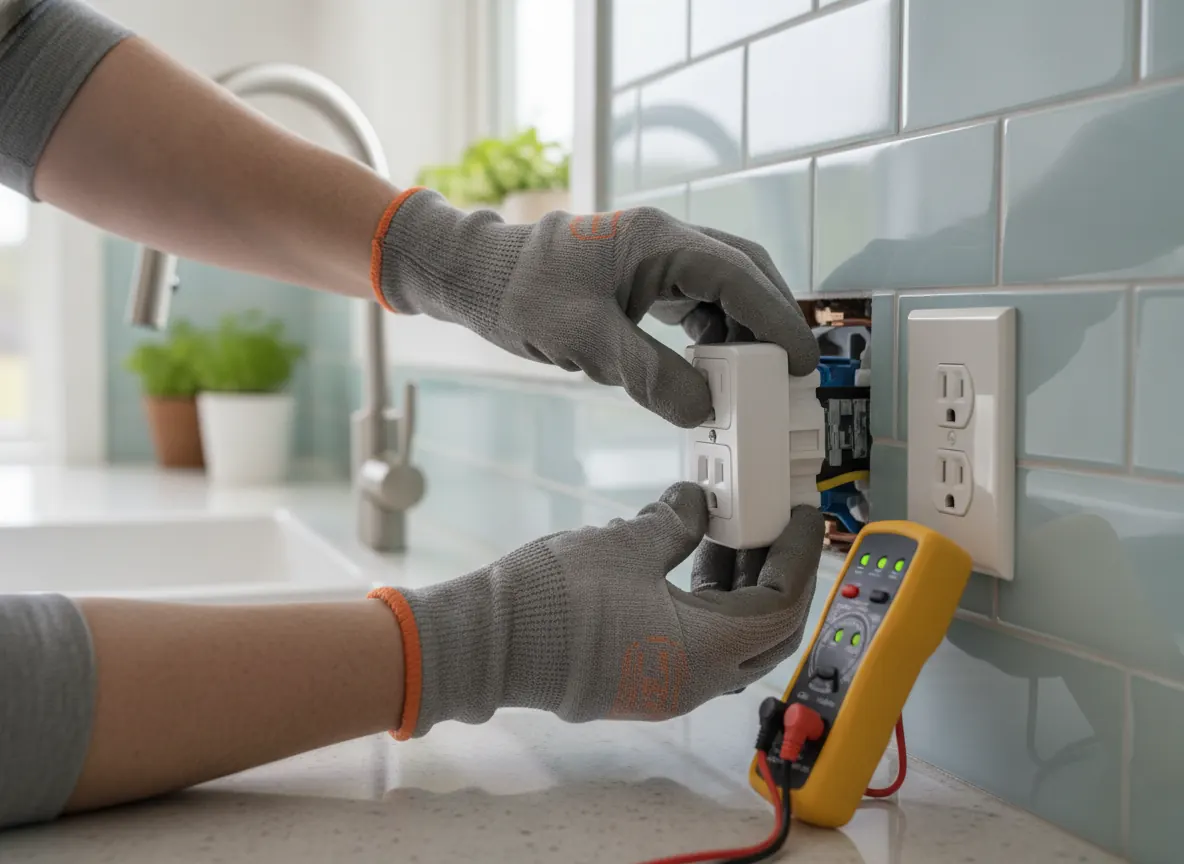
When an outlet goes dead in a Topeka, KS home, the fix is often a button you have not pressed yet. A ground-fault circuit interrupter, or GFCI, can protect several outlets down the line, and the one that tripped may be in a different room. Before you call anyone, find and reset the GFCI. If that does not work, or if it keeps tripping, this guide explains what is likely going on and when it becomes an electrician's job.
Stop and call an electrician if: the outlet is warm, scorched, cracked or melted, you smell burning, you see sparks, or a GFCI trips again the moment you reset it with nothing plugged in. Do not keep resetting it. If there is smoke or fire, call 911.
What a GFCI does
A GFCI watches the current leaving on the hot wire and returning on the neutral. If some of it goes missing, for example through water or a person, it shuts the power off in a fraction of a second. That is why codes generally require GFCI protection in kitchens, bathrooms, garages, outdoors, unfinished basements, crawlspaces and laundry areas. In many homes, one GFCI outlet protects the regular outlets wired after it. Some homes use a GFCI breaker in the panel instead.
Outlet not working: check these in order
Test the outlet with something simple
Plug in a lamp or phone charger you know works. A dead appliance can look like a dead outlet.
Look for a tripped GFCI nearby
Check every GFCI with a "test" and "reset" button: the bathroom, kitchen counters, the garage, outdoor outlets and the basement. In older Topeka homes, one GFCI in a bathroom or garage sometimes protects outlets in another room. Press reset firmly until it clicks.
Check the panel
Open the panel door and look for a breaker that sits in the middle or the off position, or one with a tripped indicator. Push it fully off, then back on. Do not remove the panel cover.
Check wall switches
Some outlets are switched, often the top or bottom half of an outlet in a living room or bedroom. Flip nearby switches.
Stop if nothing works
If the GFCI will not reset, the breaker trips again, or the outlet is still dead, the problem is inside the wall or the device. That is a job for a licensed electrician.
Why does my GFCI keep tripping?
A GFCI that trips now and then is doing its job. One that trips over and over is telling you something. The common causes:
| Pattern | Likely cause | What to do |
|---|---|---|
| Trips when one appliance is plugged in | A fault in that appliance or its cord | Unplug it and try another device; replace or repair the appliance |
| Trips after rain or snowmelt | Moisture in an outdoor outlet or a damaged in-use cover | Keep the cover closed; have the outlet and box checked |
| Trips with nothing plugged in | A worn GFCI, damaged wiring or a fault on an outlet downstream | Leave it off and call an electrician |
| Trips when the microwave and coffee maker run together | An overloaded circuit, which usually trips the breaker rather than the GFCI | Spread out the loads; ask about another circuit |
| Trips randomly, getting worse | An aging GFCI near the end of its life | Have it replaced |
Kansas weather plays a part. Outdoor and garage outlets go through about 114 nights a year at or below freezing at Topeka's Billard Airport (NOAA 1991–2020 normals), plus summer storms. Water that gets into a box, or a cord left out in the snow, is a classic reason for an outdoor GFCI to trip.
Do not bypass a GFCI
Swapping a GFCI for a regular outlet, or plugging into an extension cord from another room to avoid it, removes the protection that is meant to keep a shock from becoming an injury. If a GFCI keeps tripping, the fix is to find the fault, not remove the device.
How long do GFCI outlets last?
GFCIs wear out. Manufacturers generally recommend pressing the test button monthly; the power should cut off, and reset should restore it. If test does nothing, or reset will not hold, replace the device. Newer GFCIs are designed to show an indicator or refuse to reset when they fail, but older ones may simply stop protecting while the outlet keeps working.
When a dead outlet is something bigger
- Several outlets dead with no tripped GFCI or breaker: often a loose connection at one outlet in the chain. Outlets wired with the "backstab" holes on the back are a common place for this.
- Half the house dead: that can be a service or panel problem. See the emergency electrician page and our post on Evergy or an electrician.
- Two-prong outlets: older homes often have ungrounded outlets. A GFCI is one accepted way to add protection there, labeled "no equipment ground." See our guide to two-prong outlets.
- Aluminum wiring: the CPSC says homes wired between 1965 and the mid-1970s may contain aluminum branch wiring. Outlets on aluminum need devices and connectors suited for it, so ask the electrician.
What does GFCI repair cost?
Published national cost guides put a GFCI outlet at $130–$300 installed, about $210 on average (Angi, 2026). A service call, which often covers the first hour, runs $100–$200 (HomeGuide). After-hours visits cost more, about $150–$200 per hour plus a call-out fee (HomeGuide).
Published national cost-guide estimates (2025–2026), not quotes. Quotes come from independent contractors, not this site.
If you need several outlets updated, ask for one quote that lists each location. The Topeka electrician cost guide has a calculator, and the outlets and GFCI page covers new installs.
Permits, licenses and renters
Kansas has no statewide electrician license; cities and counties license electricians (K.S.A. 12-1525). In Topeka, ask for the contractor's City of Topeka license and confirm it with Development Services (785-368-3905). Topeka enforces the 2023 National Electrical Code. Most new wiring, circuits, panels and service changes need a city permit; your contractor normally pulls it, and Topeka's 2026 residential trade permit fee is $55. Ask who pulls it before work starts.
Renting near Washburn or anywhere in Topeka? Kansas law requires landlords to keep supplied electrical systems in good and safe working order (K.S.A. 58-2553). Report problems in writing. This is general information, not legal advice. Landlords can find more on the rental electrical inspection page.
Topeka Electricians is a free quote-referral service, not an electrician or electrical contractor. It holds no electrical license and does not perform electrical work. If you want quotes, describe the job once and independent, locally licensed electrical contractors in the Topeka area can reply on their own schedules. Companies may pay to receive requests or calls.
Frequently asked questions
Why is my outlet not working but the breaker is not tripped?
The most common reason is a tripped GFCI somewhere else on the circuit, such as a bathroom, garage or outdoor outlet. Other causes are a wall switch that controls the outlet or a loose connection at an outlet upstream. If resetting GFCIs and checking switches does not help, call an electrician.
Why does my GFCI trip when it rains?
Water is getting into the outlet, its box or something plugged into it. Keep in-use covers closed and cords out of standing water. If it keeps tripping, have the outdoor outlet and box checked and replaced if needed.
Can I replace a GFCI with a regular outlet so it stops tripping?
No. That removes required protection against shock. A GFCI that keeps tripping is reacting to a fault, a worn device or moisture, and the fix is to find that cause.
How much does it cost to replace a GFCI outlet?
Published national cost guides put a GFCI outlet at about $130 to $300 installed, around $210 on average (Angi, 2026). These are estimates, not quotes.